Showing posts with label Overworld Structures. Show all posts

Tuesday, January 30, 2024

Stronghold


Strongholds are structures that can generate underground in all Overworld biomes, and are the only way for players to reach the End dimension. To find them, the player must craft an Eye of Ender using an ender pearl and blaze powder, crafted from a blaze rod. Using the Eye of Ender while holding it will throw it, and it will fly in the direction of the nearest stronghold. After hovering in midair for several seconds, it will fall to the ground to be picked up and used again. (When an Eye of Ender is thrown, it has a 1 in 5 chance of being destroyed instead of falling.) Once the player is directly over the stronghold, the Eye of Ender will sink into the ground instead of rising into the air, and the player can then dig down to enter the structure.

In Bedrock Edition, strongholds generate randomly throughout the world. Three extra strongholds will generate around 453 blocks away from the world spawn point, and are guaranteed to generate under a village.

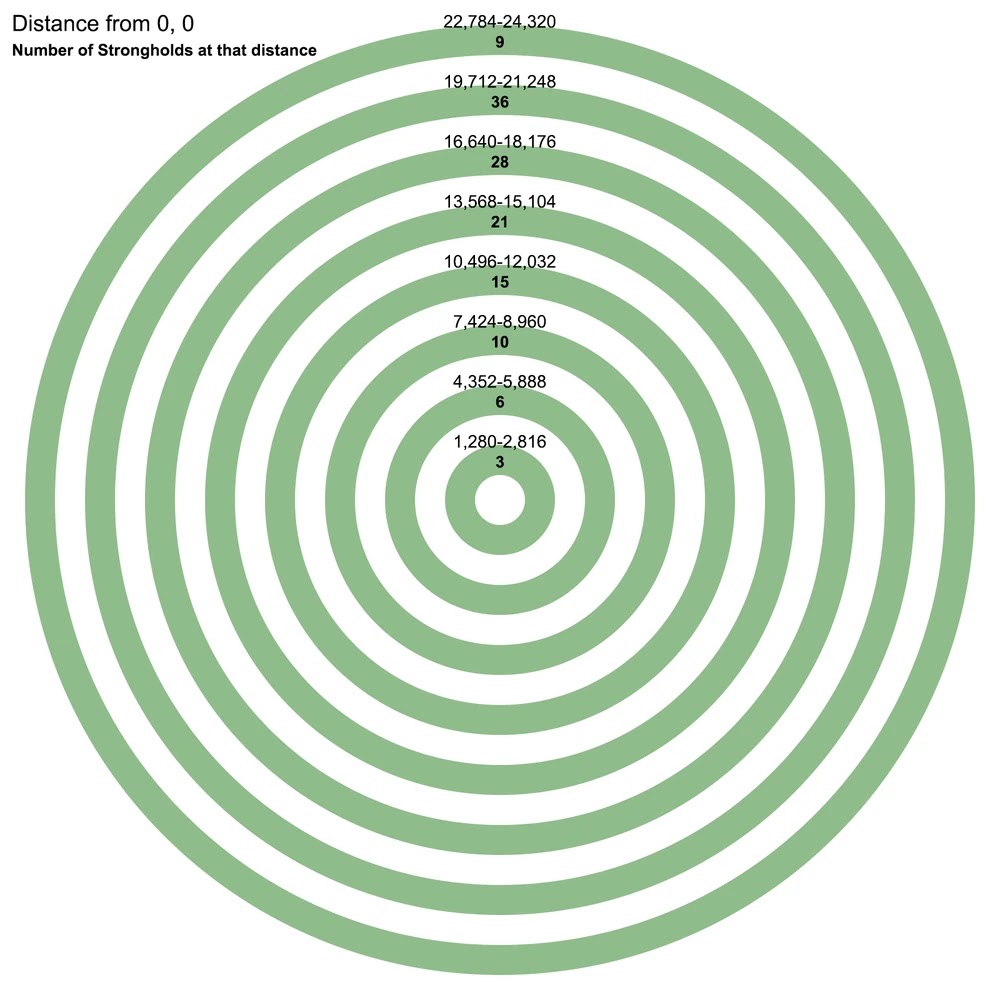
In Java Edition, there are a limited number of strongholds. Each world will have 128 strongholds, and they will generate evenly spaced on a series of rings going outward from the center of the world (the 0, 0 coordinates). The first ring begins 1,200 to 2,800 blocks out from 0,0, and the final ring begins 22,700 to 24,300 blocks out. The number of strongholds in each ring will increase as the player moves farther out, starting with three strongholds in the first ring, 6 in the second, then 10, 15, 21, 28, 36, and ending with 9 strongholds in the final ring.

Strongholds are made of a variety of stone bricks, and some of them have a chance to be infested blocks. Infested blocks are blocks that contain a silverfish, and if they are broken, the block will be destroyed and will release the silverfish it contains. If the block is broken with Silk Touch, however, the block itself will drop as a regular block, and the silverfish inside will be destroyed. Another scenario in which silverfish will emerge from infested blocks is if a nearby silverfish is hurt, but not killed, in which case it will send an alarm to all nearby silverfish, including ones in infested blocks.

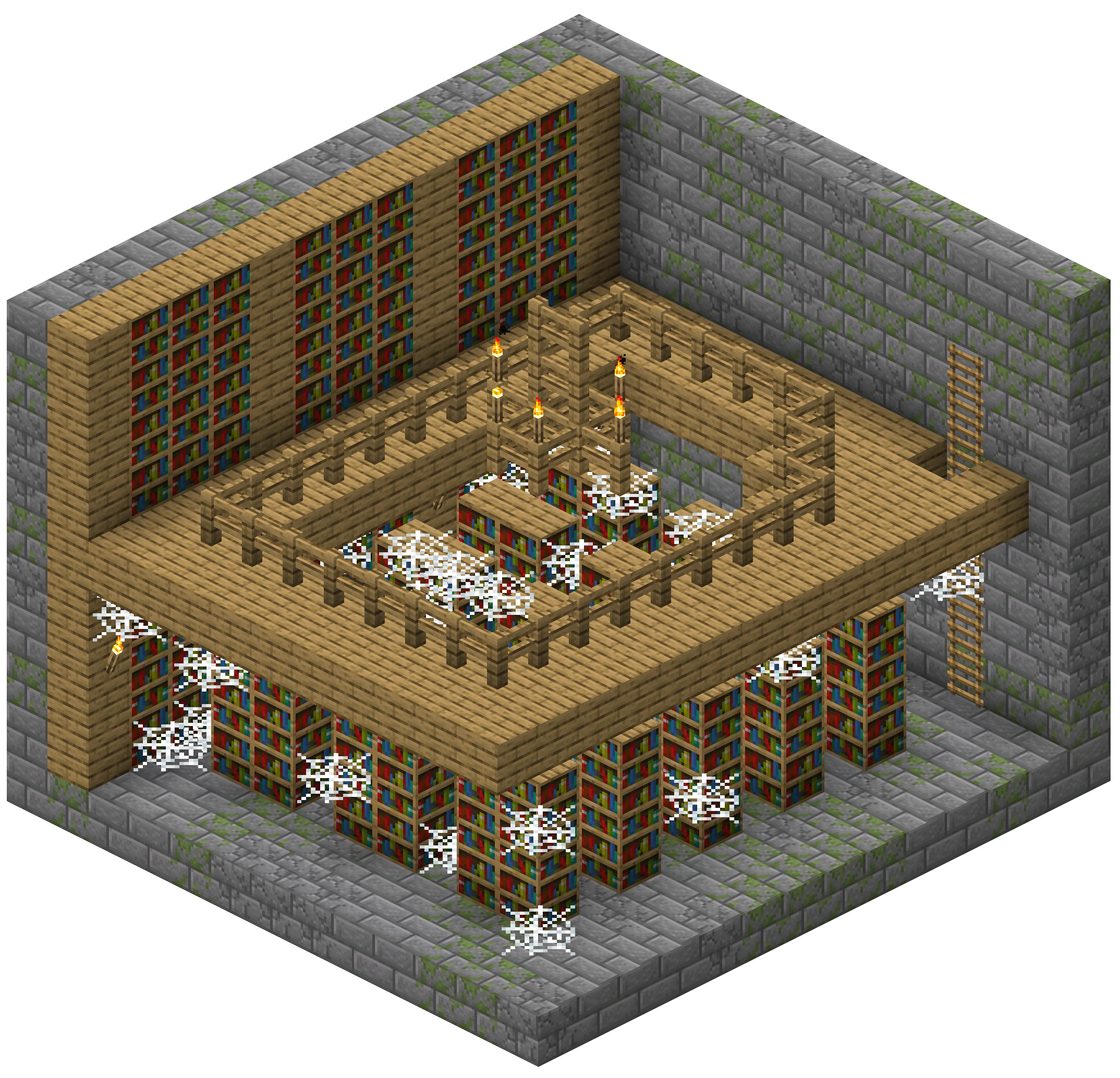
The size and shape of strongholds varies, with each one consisting of a random assortment of rooms, corridors, staircases, and intersections. There are several different types of rooms, including empty rooms, fountain rooms, store rooms, and libraries, which will be filled with bookshelves and cobwebs, and will contain up to two loot chests. There will also be jail cells made out of iron bars and several iron doors. The most important element of a stronghold, however is the portal room. The portal room will contain a silverfish spawner and an incomplete End portal. The portal will consist of 12 End portal frames, and each one must be filled with an Eye of Ender to complete the portal and grant the player access to the End dimension. There is even a chance that 1 or more of the portal frames will spawn with Eyes of Ender already in them.

Stronghold chests found in corridors will most commonly generate items like apples, bread, iron ingots, and ender pearls. Less common items are redstone dust, gold ingots, iron equipment, the Eye Armor Trim Smithing Template, and diamonds. The rarest items of all are enchanted books, saddles, horse armor, golden apples, and the Otherside music disc. In Bedrock Edition, these chests can also contain emeralds.

Storeroom chests will commonly contain items like apples, bread, coal, and iron ingots. Less common items are redstone dust and gold ingots, and the rarest items of all are enchanted books and iron pickaxes.

Library chests will always generate with a copy of the Eye armor trim, and they will also contain paper, books, enchanted books, compasses, and empty maps.

Monday, January 22, 2024

Ancient City


Ancient cities are large, sprawling structures generating exclusively in deep dark biomes in the lowest levels of the world. The structure's centerpiece is a large frame made of reinforced deepslate. Reinforced deepslate can be broken, unlike bedrock, but it will take a very long time and will not drop anything. Leading away from the reinforced deepslate frame will be two-story corridors. The corridors will have wool or carpet floors to prevent sculk sensors from detecting vibrations in them. Off to the side of the corridors smaller structures will generate, many of them having the chance to contain one or two loot chests.

Underneath the main frame will be a room filled with a variety of different redstone components, designed to demonstrate redstone's basic functions. The room is accessed by a piston door in the front of the "plinth" supporting the frame. In some ancient cities a chest will generate in front of the frame and will contain a golden apple. Eating something near that chest will open the piston door for a short time. Another iteration of the frame will have a single chiseled deepslate block in front of it, and making a noise on top of it will open the door. The third possible mechanism will open the door when any vibration is made in front of the frame.

As it is generated in a deep dark biome, parts of the ancient city can become overtaken by sculk. Sculk shriekers will generate much more frequently in ancient cities, making the environment much more dangerous than the normal deep dark biome.

Ancient cities have some of the most valuable loot in the game. The more common items that can be acquired from ancient city loot chests are coal, bones, soul torches, books, enchanted books, potions of Regeneration, disc fragments, amethyst shards, echo shards, glow berries, sculk, candles, bottles o' enchanting, sculk sensors, and enchanted iron leggings. Slightly rarer items are sculk catalysts, compasses, music discs, leads, name tags, saddles, enchanted diamond hoes, diamond horse armor, enchanted diamond leggings, enchanted golden apples, and the Otherside music disc. The rarest items of all are the ancient city's unique armor trims, Ward and Silence.

Monday, January 1, 2024

Woodland Mansion


Woodland mansions are massive structures that will only generate in dark forests, and will usually appear thousands of blocks away from the world spawn point. The easiest way to find them is to buy a woodland explorer map from a cartographer villager.

The structure consists of three floors (with the top floor being about half the size of the first and second) and a random assortment of rooms. It will also be supported by a massive cobblestone foundation. They will be inhabited by a large amount of vindicators and several evokers, and allays will also be present in the holding cells of jail rooms. Vindicators will generate in certain rooms on all floors of the mansion, but evokers will only generate on the second and third floors. Vindicators, evokers, and allays generate with the structure, and thus will not respawn there if all of them are killed or removed from the structure. Since the mansion is typically poorly lit, there is also the opportunity for standard Overworld monsters to spawn inside it.

There are a large amount of rooms that a mansion can generate, so some rooms may not be present in certain mansions, and not all rooms will contain a chest. There is also a small chance for secret rooms to generate. Secret rooms will generate without any access door, and can only be found by breaking through the mansion's walls or going around the structure looking into the windows. They will usually have very good loot. Several of them will contain a diamond block hidden from sight by obsidian or lava, and one variant contains two chests at either end of a hidden attic space.

The staircase to the second floor will be found directly in front of the mansion's entrance. The staircase to the third floor will generate in a random room on the second floor.

Woodland mansions generate with a large amount of chests, and it is worth noting that not all of them will contain loot. The most common loot that can be obtained from chests in woodland mansions is bones, gunpowder, rotten flesh, string, and the Vex armor trim. Slightly less common items are wheat, bread, leads, name tags, coal, redstone dust, music discs, golden apples, diamond hoes, seeds, iron ingots, and empty buckets. The rarest items of all are enchanted books, chainmail chestplates, gold ingots, diamond chestplates, and enchanted golden apples.

Monday, November 20, 2023

Ocean Monument


Ocean monuments are structures made entirely out of prismarine that can be found in deep oceans and its variants. They can also be found using an ocean explorer map, which can be purchased from an apprentice cartographer. The area in and around it, if it is flooded, will constantly spawn guardians, and the structure itself will generate with three elder guardians, which will not respawn if killed. One elder guardian will generate in the top of the structure, and there will be another one in each wing.

The inside of the structure resembles a maze, with corridors and rooms winding in all directions. In some cases, both wings of the monument will be connected by a passage that travels around the back of the structure. One special room is called a sponge room. The entrance to it is always in the ceiling of another room, and its ceiling will be covered with wet sponges. Smelting wet sponges in a furnace will turn them into dry sponges, and, when placed, dry sponges will dry up all the water within 7 blocks of it and turn itself back into a wet sponge.

In the center of the monument there will a large room with a box made out of dark prismarine. Inside this box there will be 8 blocks of gold.

Monday, October 23, 2023

Trail Ruins


This is how trail ruins will typically be found.

Trail ruins are Overworld structures that will generate in jungles, old growth birch forests, old growth pine taigas, old growth spruce taigas, snowy taigas, and taigas. They are usually found buried, although on Bedrock Edition it is much more common that the entire trail ruin will generate on the surface. They can be found on land or underwater, and will typically generate near oceans or rivers.

Trail ruins consist of a number of buildings lining a path made of cobblestone, stone, and stone bricks. There will always be a tall tower with random buildings either side of it. The tip of the tower will typically be exposed on the surface, which is usually the only indication of the fact that there is a trail ruin there at all. The rest of the structure will be a random assortment of buildings.

The buildings in a trail ruin will consist mostly of mud bricks, terracotta, and glazed terracotta. They will also sometimes generate with bricks, coal blocks, and a variety of different villager workstations. The whole structure will generate buried in gravel, dirt, coarse dirt, and suspicious gravel. Suspicious gravel has a slightly coarser texture than regular gravel. It cannot be obtained in Survival with any tool, similar to monster spawners, and will simply break if mined. This will also happen if it falls as the result of a block underneath it being broken.

Using a brush on suspicious gravel will eventually cause it to drop a piece of loot, and turn the block into regular gravel. There is a large range of loot that can be acquired from suspicious gravel in trail ruins. The more common items are dyes, dyed candles, bricks, emeralds, wheat, and wooden hoes. The slightly less common items are stained glass panes, beetroot seeds, coal, dead bushes, coal, flower pots, leads, oak and spruce hanging signs, string, wheat seeds, and gold nuggets.

The rarest items of all are a variety of different pottery sherds, the Host, Raiser, Shaper, and Wayfinder armor trims, and the Relic music disc.

Monday, September 11, 2023

Village

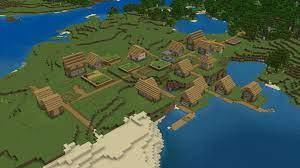
A plains village

Villages are Overworld structures that can be found generating in plains, deserts, meadows, savannas, snowy plains, taigas, and, on Bedrock Edition, snowy taigas and sunflower plains. They are also slightly more common on Bedrock Edition than on Java Edition.

Villages consist of a series of houses connected by dirt paths to a central meeting point with a bell, where the villagers will hold their afternoon meetings. (Moving the bell will also move the meeting area.) There will also be occasional gardens (with composter workstations nearby), hay bale piles, and animal pens throughout the area. Stray cats will also constantly respawn around villages, and a single camel will generate with every desert village.

Some of the houses will have loot chests in them, and some houses will generate with workstations. A large number of houses will also generate with beds. For every bed generated in a village, an unemployed villager will be generated alongside it. Certain types of workstations are more common in different biomes. For example, a grindstone workstation is more common in taiga villages than in any other type of village.

Loot chests that generate in houses with workstations will have loot related to the profession the workstation provides. For example, a butcher's house will contain raw meat in the chest, a cartographer will have empty maps or paper, a blacksmith will have iron gear, and so on. All the other chests mainly have crops and emeralds.

There is a 2% chance for a village to generate as an abandoned village (also known as a zombie village). In an abandoned village, all the doors and torches will be removed, random blocks in the houses will be replaced by cobwebs, and instead of villagers, zombie villagers will generate. These zombie villagers, unlike naturally spawned zombie villagers, won't despawn, and will avoid going out into the sun, only emerging when the sun has set.

If a player enters the area of a village with the Bad Omen status effect, a raid will be triggered, in which waves of illagers will move in toward the village with the aim of wiping out the village's population. The amount of waves in a raid depends on the difficulty. There are 3 waves in Easy Difficulty, 5 waves in Normal Difficulty, and 7 waves in Hard Difficulty. There will also be an additional raid for each additional level of Bad Omen, up to Bad Omen V and 4 additional waves. Higher levels of Bad Omen will also increase the chances of illagers in the raid spawning with enchanted weapons.

If the player is in a village which has at least 20 valid beds at midnight, there is a 10% chance for a zombie siege to begin, in which up to 20 zombies will spawn in random locations around and inside the village. Zombie sieges will spawn in any light level. (This feature is exclusive to Java Edition!)

For a village to count as a village for the purposes of starting raids or zombie sieges, there must be at least one villager that is paired to a point of interest, for example a workstation or a bed. If these conditions are met, it will be able to start raids or zombie sieges. If, during a raid, all the points of interest are destroyed, or all the villagers are killed, the raid will have accomplished its objective, and will be a defeat for the player.

Monday, August 7, 2023

Pillager Outpost


Pillager outpost are structures that can generate in plains, cherry groves, deserts, savannas, taigas, snowy plains, meadows, groves, snowy slopes, jagged peaks, frozen peaks, and stony peaks, as well as snowy taigas and sunflower plains in Bedrock Edition. Pillagers will constantly respawn around the structure, and apart from the main watchtower, they will also generate with a number of other, smaller structures around them, such as log piles, tents containing pumpkins and a crafting table, target dummies, and cages that can contain iron golems or allays.

The watchtower will generate with one loot chest, which will most commonly contain dark oak logs, crossbows, bottles of enchanting, wheat, carrots, and potatoes. More rarely they will contain arrows, string, tripwire hooks, iron ingots, and enchanted books. It also has a 25% to generate with two copies of the Sentry armor trim.

Monday, July 10, 2023

Desert Well


Desert wells are small structures made of sandstone that generate in desert biomes. They contain five water sources and several blocks of suspicious sand. Suspicious sand has a slightly coarser texture than regular sand. It cannot be obtained in Survival with any tool, similar to monster spawners, and will simply break if mined. This will also happen if it falls as the result of a block underneath it being broken.

Using a brush on suspicious sand will eventually cause it to drop a piece of loot, and turn the block into regular sand. Several different items can be acquired from the suspicious sand in desert wells. The most common of these are the Arms Up and Brewer pottery sherds. Less common items are bricks, emeralds, sticks, and suspicious stew.

Monday, July 3, 2023

Igloo


Igloos are structures that will generate in all snowy biomes except for ice spikes. The interior of an igloo is carpeted and will always contain a bed, furnace, crafting table, and, to light up the interior, a redstone torch.

Half of igloos will have a basement research station, accessed by a trapdoor underneath the carpet. The basement will contain a brewing stand, a cauldron, a flower pot containing a cactus, and a loot chest. The cauldron will be partially filled with water, and the brewing stand will always contain a splash potion of weakness.

The basement will also contain a villager and a zombie villager, in two separate cells. The zombie villager can be cured using the splash potion of weakness and a golden apple, which will always show up in the loot chest.

The loot chest can contain a variety of different items aside from a golden apple, which is always present. The most common items are coal, apples, wheat, gold nuggets, and rotten flesh. A rarer item is a stone axe, and the rarest item of all is an emerald.

The basement will be mainly made out of stone bricks, and some of them may be infested stone bricks. Infested stone bricks, when broken, will release a single silverfish. Attacking the silverfish will cause more silverfish to emerge from other nearby infested blocks.

Wednesday, June 7, 2023

Desert Pyramid


Desert pyramids are sandstone structures that will generate in deserts. In the center of the pyramid is a rose pattern made out of terracotta and and sandstone. Underneath this pattern is a secret room containing four loot chests. In the center of the secret room is a stone pressure plate, which, when stepped on, will activate 9 blocks of TNT hidden under the floor.

The chests will most commonly contain things like bones, gunpowder, rotten flesh, string, and, less commonly, enchanted books. The rarest items of all are horse armor, diamonds, and enchanted golden apples. There is also a small chance for them to contain two copies of the Dune armor trim.

The pyramid will also contain an additional hidden room. In the back of the structure, on either the left or right side, there will be a lower room, with a staircase connecting it to the main floor, completely buried in sand, some of it being suspicious sand. Suspicious sand has a slightly coarser texture than regular sand. It cannot be obtained in Survival with any tool, similar to monster spawners, and will simply break if mined. This will also happen if it falls as the result of a block underneath it being broken.

Using a brush on suspicious sand will eventually cause it to drop a piece of loot, and turn the block into a regular sand block. Emeralds, gunpowder, diamonds, and 4 different pottery sherds can be brushed from suspicious sand in desert pyramids, each item having a 12.5% chance of generating.

Monday, May 8, 2023

Jungle Temple


Jungle temples are structures that will generate in jungles and, in Java Edition, bamboo jungles. They will generate with three floors. In the bottom floor there is a set of three levers. When pulled in the right order, they will reveal a secret room on the main floor, containing a single loot chest.

Opposite the lever puzzle, there is a corridor that leads to another loot chest. The corridor will have two tripwire lines laid out on the floor, each of them connected to a dispenser. Walking over a tripwire line will trigger the dispenser, causing it to fire an arrow.

The loot chests will most commonly contain bones, rotten flesh, bamboo, and gold and iron ingots. They will also rarely contain diamonds, enchanted books, or horse armor. There is also a chance for them to contain two copies of the Wild armor trim.

Monday, April 10, 2023

Buried Treasure


Buried treasure chests will generate buried in beach biomes or, more rarely, the ocean floor, and can be found using a buried treasure map, which can be found in shipwrecks and ocean ruins. The chest will always contain a heart of the sea, a vital crafting ingredient for a conduit, which, when activated, will give the player water breathing and night vision. It will also contain a variety of other items, which can include potions of water breathing, iron and gold ingots, cooked fish, TNT, emeralds, and diamonds. In Bedrock Edition, there are a variety of other items the chest can contain, including chain mail armor, TNT, music discs, and, very rarely, cake.

Monday, March 13, 2023

Ocean Ruin

Cold ocean ruin

Warm ocean ruin

Ocean ruins will generate in most of the Overworld's aquatic biomes, and will sometimes generate on land on beaches. These structures resemble small towns, and will contain a variety of buildings and loot chests. A small amount of drowned may generate with the structure.

The loot chests will contain things like coal, wheat, buried treasure maps, stone axes, and, more rarely, enchanted books, enchanted fishing rods, and emeralds. The rarest items of all are leather tunics, gold helmets, and golden apples.

Ocean ruins will also generate with blocks of suspicious sand or suspicious gravel scattered around the site of the structure and inside some of the buildings. Suspicious sand and suspicious gravel have slightly coarser textures than the regular blocks. They cannot be obtained in Survival with any tool, similar to monster spawners, and will simply break if mined. This will also happen if it falls as the result of a block underneath it being broken.

Using a brush on suspicious sand or suspicious gravel will eventually cause it to drop a piece of loot, and turn the block into its regular counterpart. The most common items that can be acquired from suspicious sand and gravel in ocean ruins are coal, emeralds, wheat, wooden hoes, and gold nuggets. The less common items are different types of pottery sherds and iron axes. There is also a small chance for suspicious sand in warm ocean ruins to produce a sniffer egg.

Tuesday, February 14, 2023

Abandoned Mineshaft


Abandoned mineshafts are structures that will generate in all Overworld biomes. They consist of a series of winding corridors, rooms that branch off in a series of other corridors, and broken up sections of rails on the floor. If a corridor generates in midair, it will generate with a series of chains connecting it to the ceiling.

A variant of mineshaft, the badlands mineshafts, will generate in badlands biomes. The regular mineshaft is built up with oak wood, but the badlands mineshaft will consist of dark oak, a dark brown wood type.

These structures contain cave spider spawners, which will spawn the poisonous variant of spider. The area around these spawners will be packed with cobwebs. Cobwebs, when walked through, will greatly slow the movement of players and mobs, but will not affect the cave spiders.

The structure will contain a series of loot chests, in the form of chest minecarts. The more common loot items in these chests are rails, name tags, glow berries, and the occasional golden apple. There might also be an assortment of seeds. Rarely, you will find diamonds, and, even more rarely, enchanted golden apples.

Monday, January 16, 2023

Swamp Hut


Swamp huts (also known as witch huts) are small structures that may generate in swamps. Witches and black cats will constantly spawn around a swamp hut, even if the hut itself is removed. The hut will contain a crafting table, a flower pot with a red mushroom in it, and a cauldron. In Bedrock Edition, the cauldron will be partially filled with a random potion.

Monday, December 19, 2022

Shipwreck


Shipwrecks are structures that will generate in various states of disrepair in most of the Overworld's aquatic biomes. They will generate either upright, on their side, or upside-down. They will be made out of a variety of wood and contain up to 3 loot chests, one in the bow (front) of the ship and two in the stern (back). Some chests may be missing, depending on how intact the shipwreck is.

The three different types of chests are supply chests, treasure chests, and map chests. Supply chests will more commonly contain things like suspicious stew (which will grant the player a brief status effect), a variety of crops, moss, and coal. Enchanted pieces of leather armor will sometimes show up, and the rarest item to be found is TNT.

Treasure chests will usually contain iron, gold, emeralds, and lapis lazuli. They will also rarely contain bottles of enchanting (which will grant you a small amount of experience when thrown) and diamonds.

Map chests will always generate with a buried treasure map, which will lead the player to a buried chest containing a variety of useful items. They may also contain paper, feathers, and books, and, more rarely, clocks, compasses, and maps.

All of these chests also have a small chance to generate two copies of the Coast armor trim.

Monday, November 21, 2022

Ruined Nether Portal


Ruined Nether portals are structures that generate in all biomes of both the Overworld and the Nether. They will appear in various states of ruin throughout the world, with an incomplete portal frame consisting of obsidian, as well as the occasional block of crying obsidian, which cannot be used to make a Nether portal. It will have a frame of stone variants in the Overworld and blackstone in the Nether. The natural terrain around them will be converted to netherrack, the Nether's version of cobblestone. There will also be a number of lava pools.

They will generate with up to 6 blocks of gold, and a loot chest. In Bedrock Edition, the portals will always generate with a loot chest, but in Java Edition there is a possibility of it not generating. The loot chest will contain gear needed to rebuild the Nether portal, including obsidian and a flint and steel or a fire charge. It will also contain a variety of enchanted golden gear, other gold-related items, and, very rarely, an enchanted golden apple.

Monday, October 24, 2022

Dungeon


Dungeons are structures found in all Overworld biomes. They will always generate connected to a cavern or other hollow area, and will contain up to 2 loot chests and a monster spawner, which will produce zombies, skeletons, or spiders. There is a 50% chance of the spawner generating as a zombie spawner, and a 25% chance of it generating as either a skeleton or a spider spawner.

Spawners are unobtainable in Survival Mode, and breaking one will drop 15-43 experience, instead of the spawner itself.

There are a number of items that can appear in the loot chests, some more common ones being bones, rotten flesh, name tags, music discs (which can be played using a jukebox), and golden apples. Rarer loot items include horse armor and enchanted books, and the rarest item of all is an enchanted golden apple, with only a 3.1% chance of generating.

Minecraft YouTube Channel

Hey guys, I'm making this post to let you know that I've started a Minecraft YouTube channel! Here's the link if you're inte...